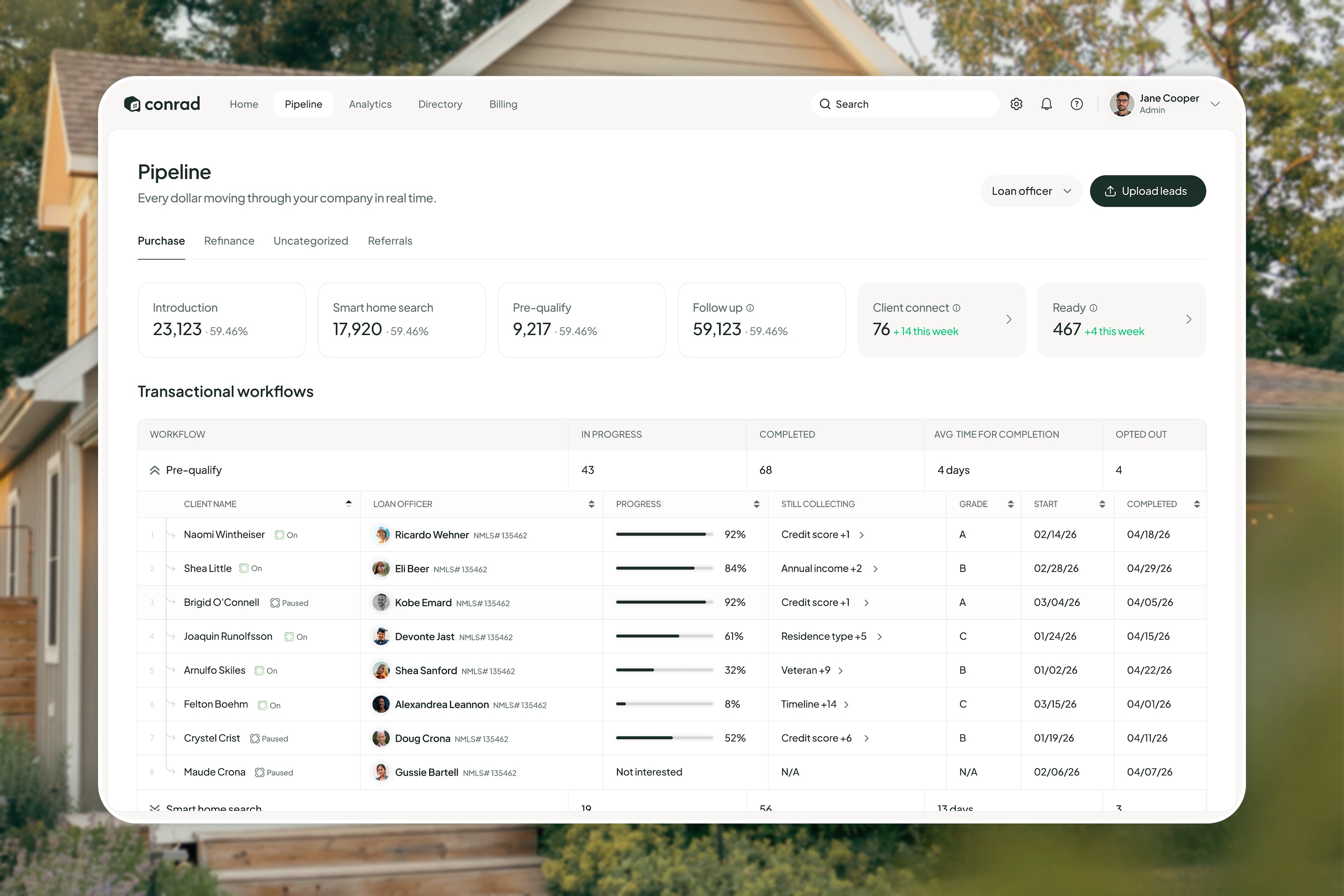
Conrad
Introduction
Building a more connected operating system for real estate
I co-founded Conrad after spending enough time around real estate agents and loan officers to see the same problem repeatedly: the industry had no shortage of software, but very little of it worked well together.
Agents and loan officers were managing CRMs, lead platforms, referral tools, transaction software, messaging apps and countless other systems. Every product solved a small piece of the workflow, but together they created something expensive, fragmented and unnecessarily complicated.
Conrad originally started as a referral network.
The idea was straightforward: create a better way for real estate professionals to build relationships and exchange business.
But the deeper we went into the industry, the more obvious it became that referrals were only one symptom of a much bigger problem.
The real problem was fragmentation.
Process
The opportunity became much bigger
At first, we were designing around the professional network: helping real estate agents and loan officers connect, build relationships and generate opportunities.
Over time, our perspective changed.
Instead of asking:
How do we build a better network for real estate professionals?
We started asking:
What would the real estate transaction look like if we designed it entirely around what is best for the consumer?
That question changed the direction of the company.
If buying or selling a home could become dramatically faster, simpler and less expensive, the product would naturally become more valuable for every professional involved in the transaction as well.
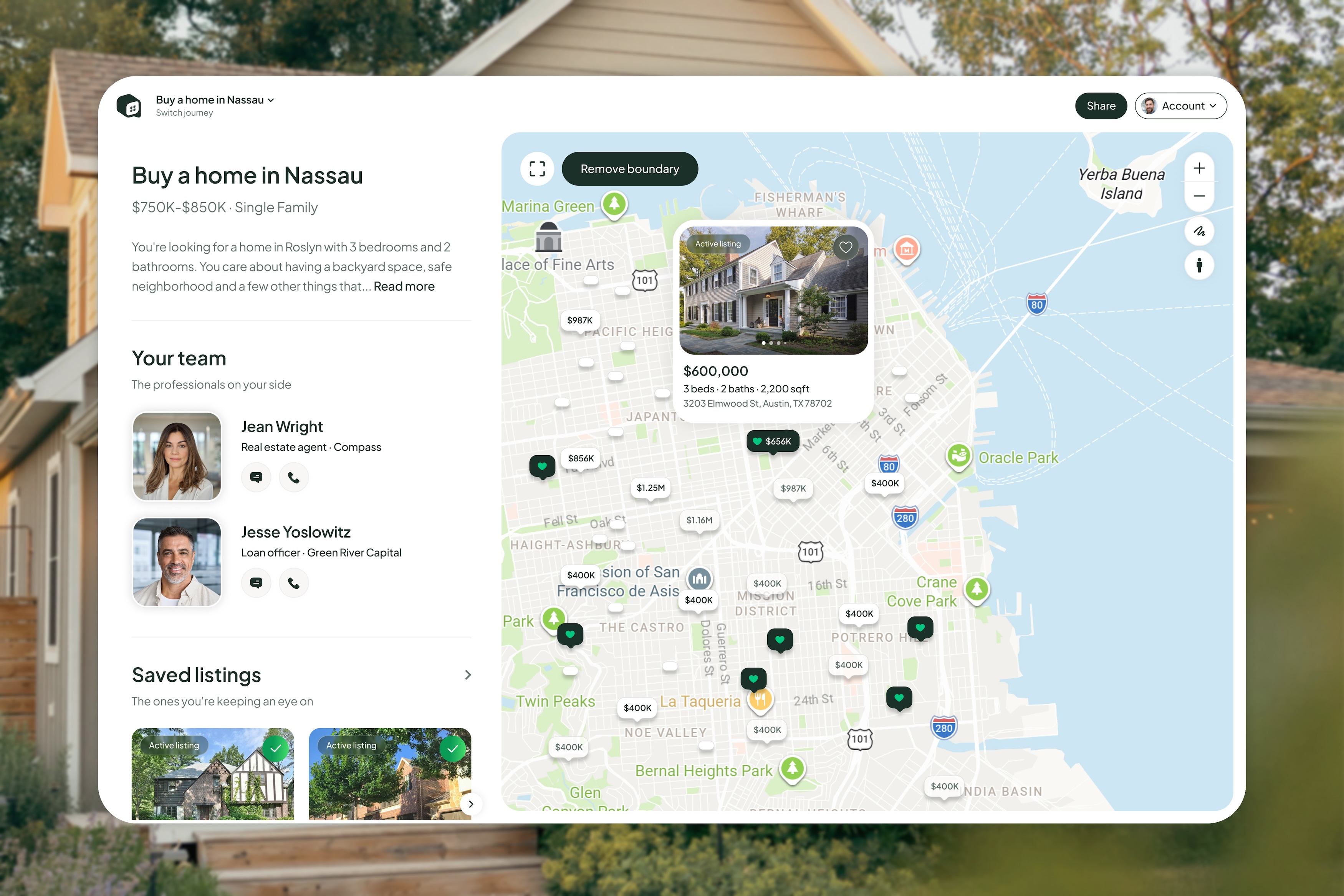
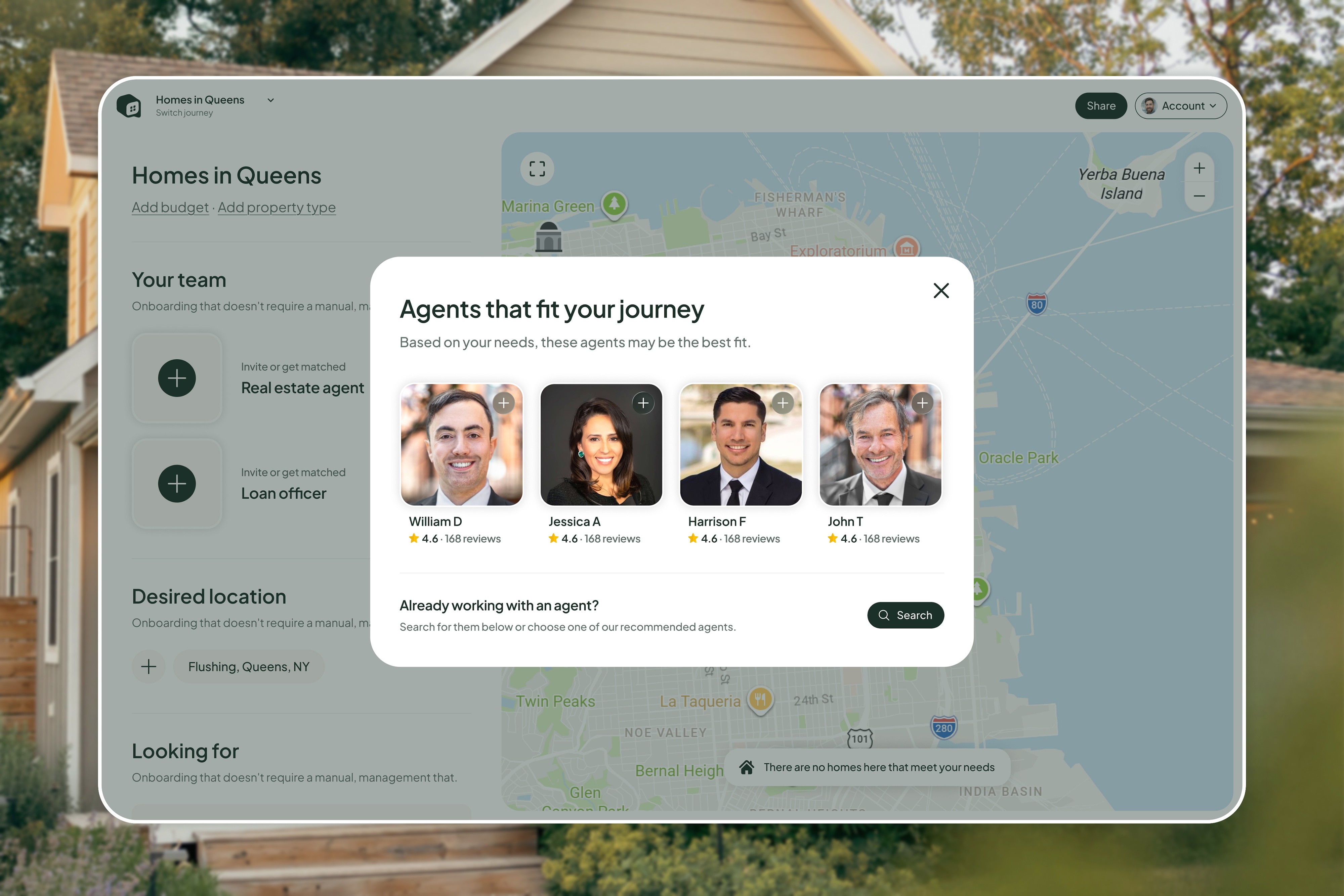
Conrad began evolving from a referral network into a much broader platform designed to connect the people, communication, workflows and intelligence surrounding a real estate transaction.
The long-term vision
The long-term vision for Conrad was ambitious:
Create the place where the entire real estate transaction can happen.
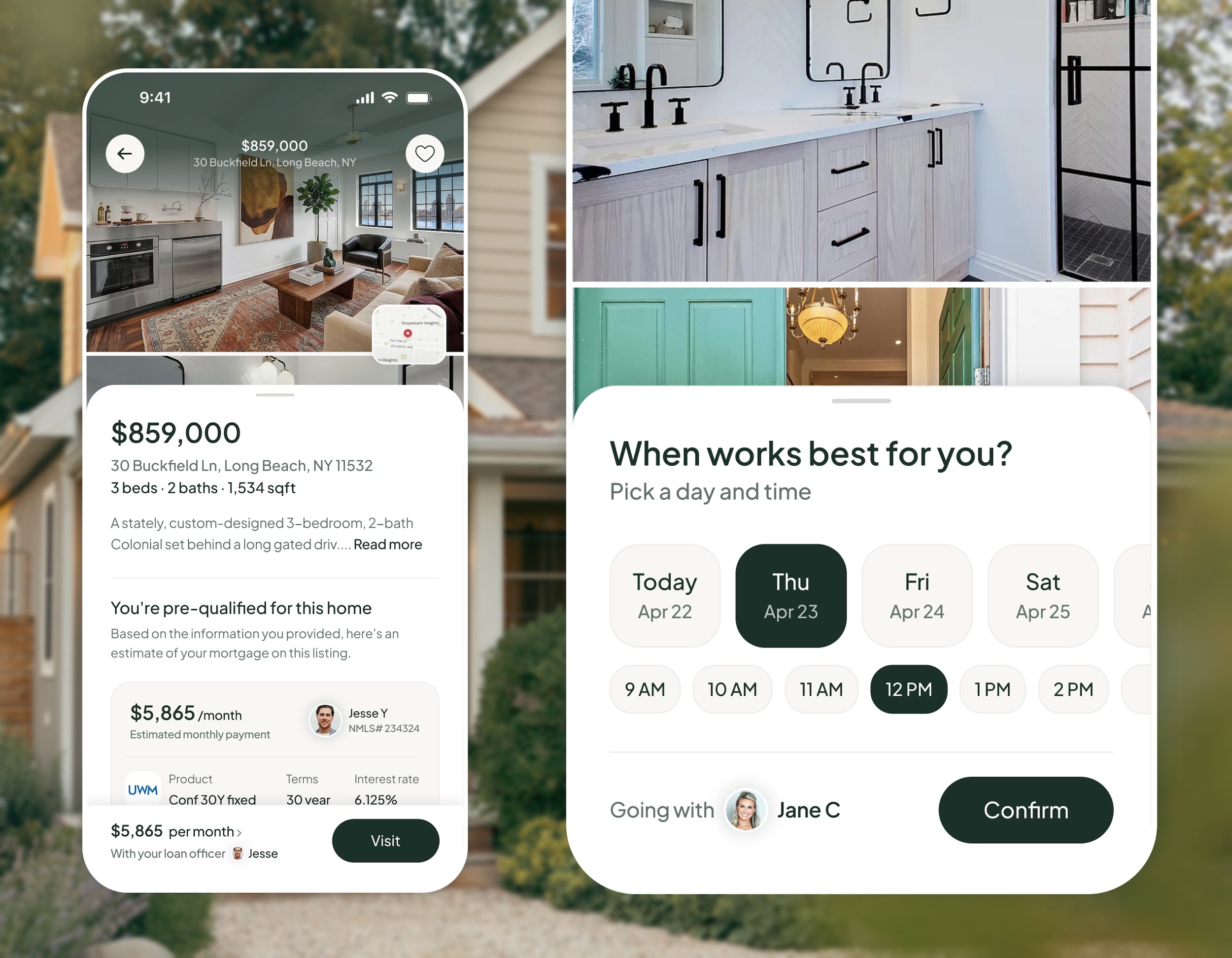
Today, buying a home can involve dozens of people, systems, handoffs and repetitive tasks. Information gets entered multiple times, communication gets lost between parties and consumers often have very little visibility into what is actually happening.
We believed much of that complexity could eventually disappear.
With the right infrastructure and a sufficiently capable AI layer, a transaction that currently takes weeks or months could ultimately move dramatically faster, potentially reaching a point where certain homes could close within 24 hours.
Not by removing professionals from the transaction, but by eliminating the unnecessary work surrounding them.
Designing AI around trust
One of the most important product decisions we made was how AI should interact with consumers.
Real estate is highly regulated and deeply personal. A home is often the largest financial transaction someone will ever make.
Because of that, we never wanted the AI to feel like a black box operating somewhere in the background.
The system needed to be powerful, but it also needed to remain transparent and human.
One example was communication.
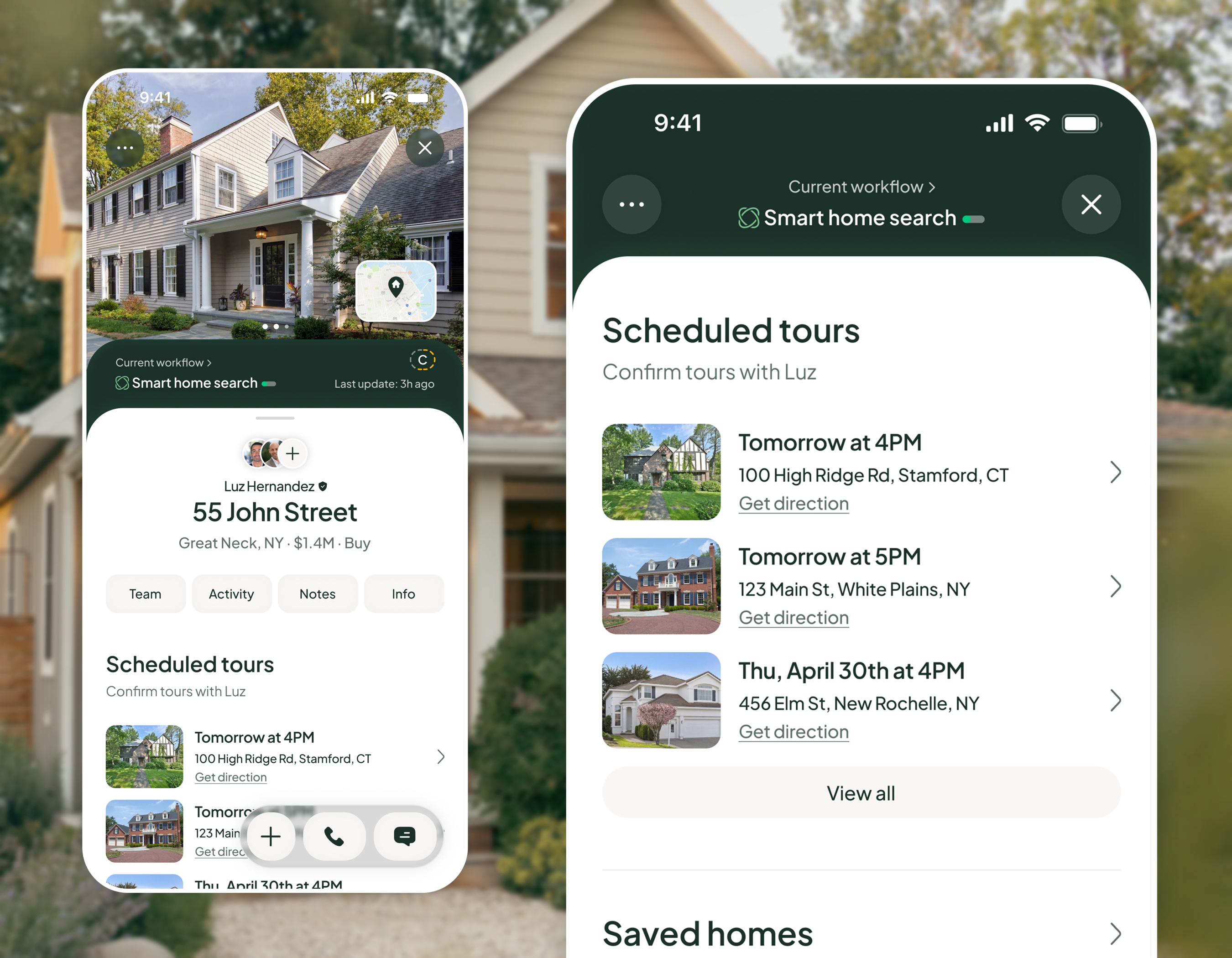
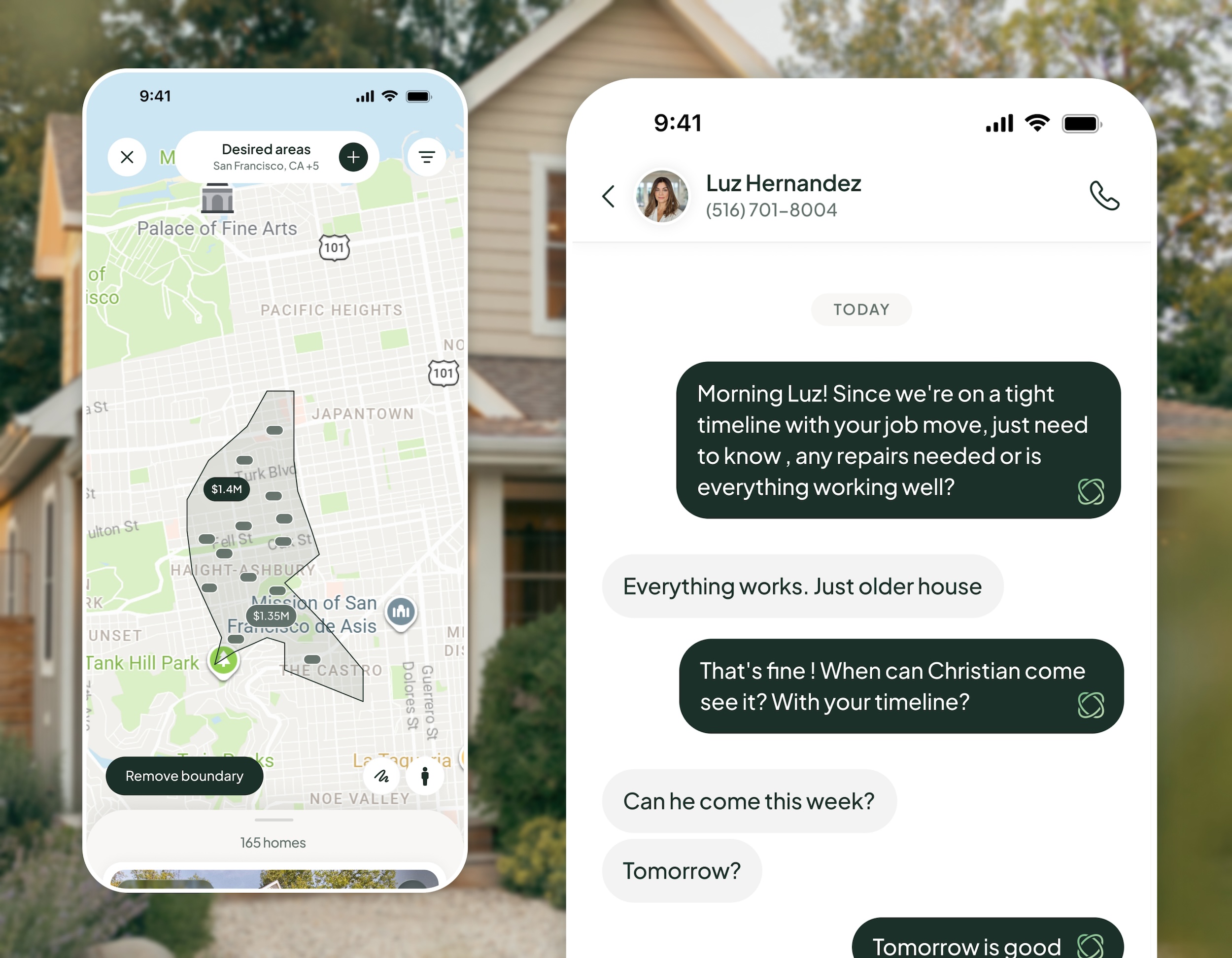
Instead of separating the AI and the professional into different channels, we designed the experience around a shared phone number. The AI could handle conversations and operational work, while the professional could step into the same conversation whenever human judgment was necessary.
There was no artificial wall between automation and the person responsible for the relationship.
We also wanted users to understand what the AI was working on, rather than simply seeing an unexplained outcome after the fact.
The goal was to create an experience where automation felt natural, almost like another member of the team while keeping the professional in control.
Product philosophy
A lot of our product decisions came back to a few principles.
Reduce fragmentation
Every new feature had to reduce the number of places a professional needed to work, not create another destination they had to manage.
Keep the human in the loop
AI could automate repetitive work, coordinate workflows and handle communication, but professionals needed the ability to step in whenever context, judgment or regulation required it.
Make automation visible
When the system was doing work, the user should understand what was happening.
Make it feel organic
We didn't want AI interactions to feel like a chatbot bolted onto a real estate application. The technology needed to disappear into the workflow.
Design the system, not individual features
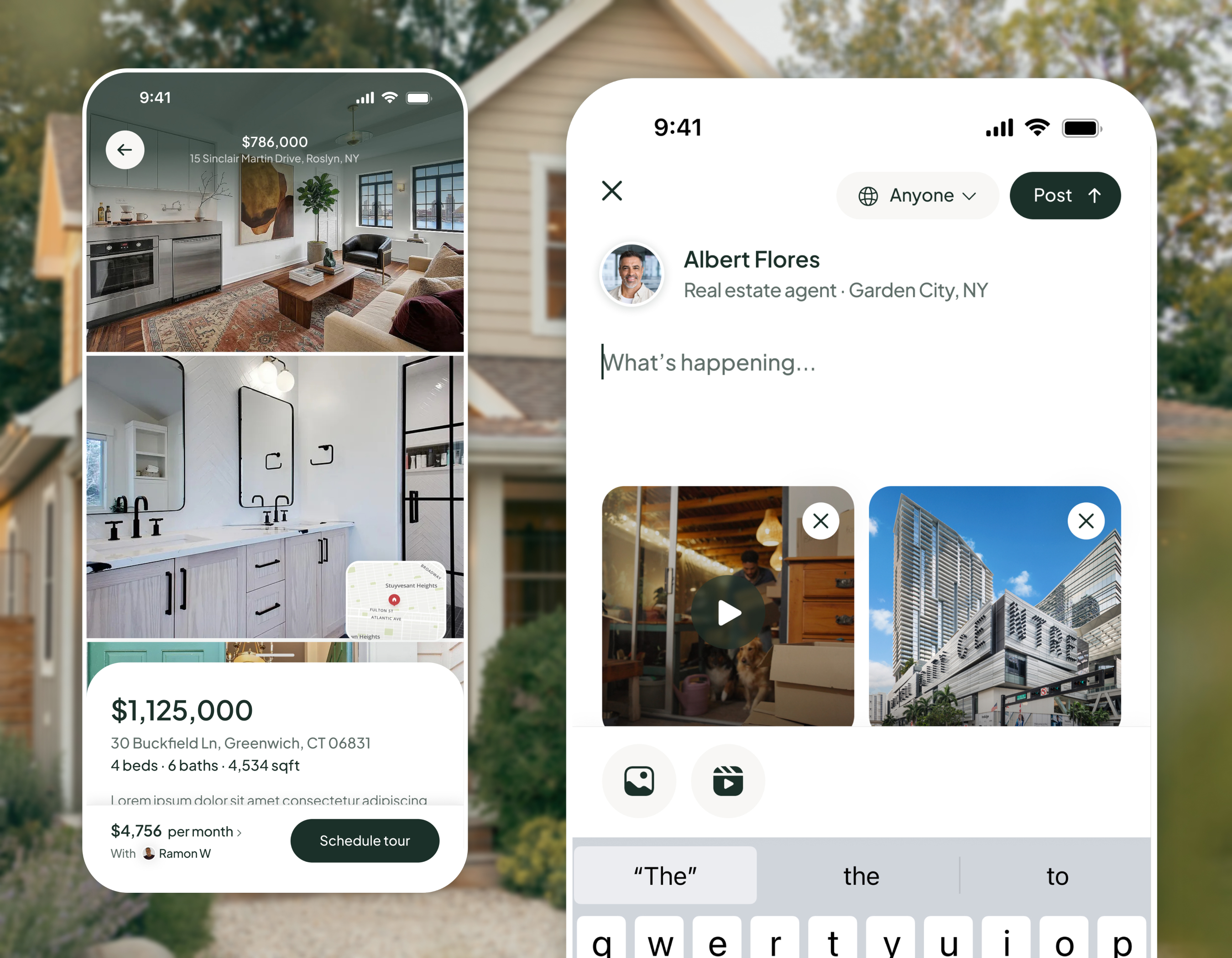
As the product grew, one of my biggest responsibilities was making sure referrals, communication, leads, profiles, transactions, AI and enterprise functionality all felt like parts of the same product rather than independent tools.
My role
I was Conrad's Co-Founder and Chief Product Officer.
I owned essentially everything related to product and design.
That included product strategy, UX, interface design, the design system, prototyping, feature definition, product requirements, roadmap decisions, developer handoff, QA and the broader product management pipeline.
I also managed our five-person engineering team and worked closely with them from initial product thinking through implementation.
Because the team was relatively small compared with the scope of what we were building, one of my biggest responsibilities was maintaining velocity without allowing the product to become inconsistent.
Over roughly two years, we built a surprisingly deep platform spanning professional networking, referrals, profiles, lead and transaction workflows, communication, AI-powered experiences and enterprise functionality.
The amount of product we were able to build with a small team remains one of the things I'm most proud of.
Designing at startup speed without designing recklessly
Building a startup product at this scale creates a constant tension between speed and quality.
Moving quickly is important, but repeatedly taking shortcuts in the product architecture creates a different kind of cost later.
From the beginning, I tried to build Conrad as a system rather than a collection of MVP screens.
Figma became the source of truth for the product and design system.
Components, interaction patterns and product behaviors were designed to scale across the platform rather than being recreated feature by feature.
For important interactions, I built prototypes so engineers could understand not only what a screen should look like, but how the experience should actually behave.
That reduced ambiguity between design and development and helped us maintain a much higher level of product consistency while moving quickly.
AI as a product copilot
AI also became an important part of how I worked.
I didn't use AI to replace product thinking or design decisions. I used it to increase the amount of thinking I could do.
Claude became a regular copilot for product research, exploring product concepts, challenging assumptions, technical discussions, writing specifications and refining product copy.
I frequently used AI to pressure-test UX decisions.
Instead of asking it to generate the answer, I would use it to explore edge cases, uncover assumptions or argue against a direction I was considering.
For prototypes, AI-generated content and datasets allowed me to design experiences using more realistic scenarios instead of placeholder content.
Monday.com managed the broader product pipeline, while Figma remained the central environment for the product itself.
Used together, these tools allowed me to operate with significantly more leverage than a traditional one-person product and design function.
The important part wasn't using more tools.
It was knowing what to delegate to them and what still required judgment.
From network to infrastructure
The biggest strategic shift in Conrad happened when we stopped thinking about the network as the destination.
The network still mattered, but it became part of something larger.
Our original hypothesis was that creating better professional connections would unlock more business.
Eventually, we realized the greater opportunity was to improve the transaction itself.
That changed how we thought about nearly everything: the user experience, the AI, communication, workflows and ultimately the role Conrad could play in the industry.
Instead of building another product real estate professionals would have to add to their stack, the ambition became to remove as much of that stack as possible.
Conclusion
What I'm most proud of
What I'm most proud of isn't any individual feature.
It's the amount of product we were able to turn from an idea into something real.
In roughly two years, a five-person engineering team and a very small product organization built a platform with a level of depth that would normally require a significantly larger company.
The product evolved substantially during that period, but the central idea became clearer with every iteration:
Real estate doesn't need more software.
It needs fewer systems, better connected, with intelligence sitting across the entire transaction.
That became Conrad's product thesis.